It is by no means certain that the best thing that could happen for the many people in Iran now struggling for their freedom is for Donald Trump to bomb their country. Such a scenario is now perfectly feasible in a way that it was not even a year ago.
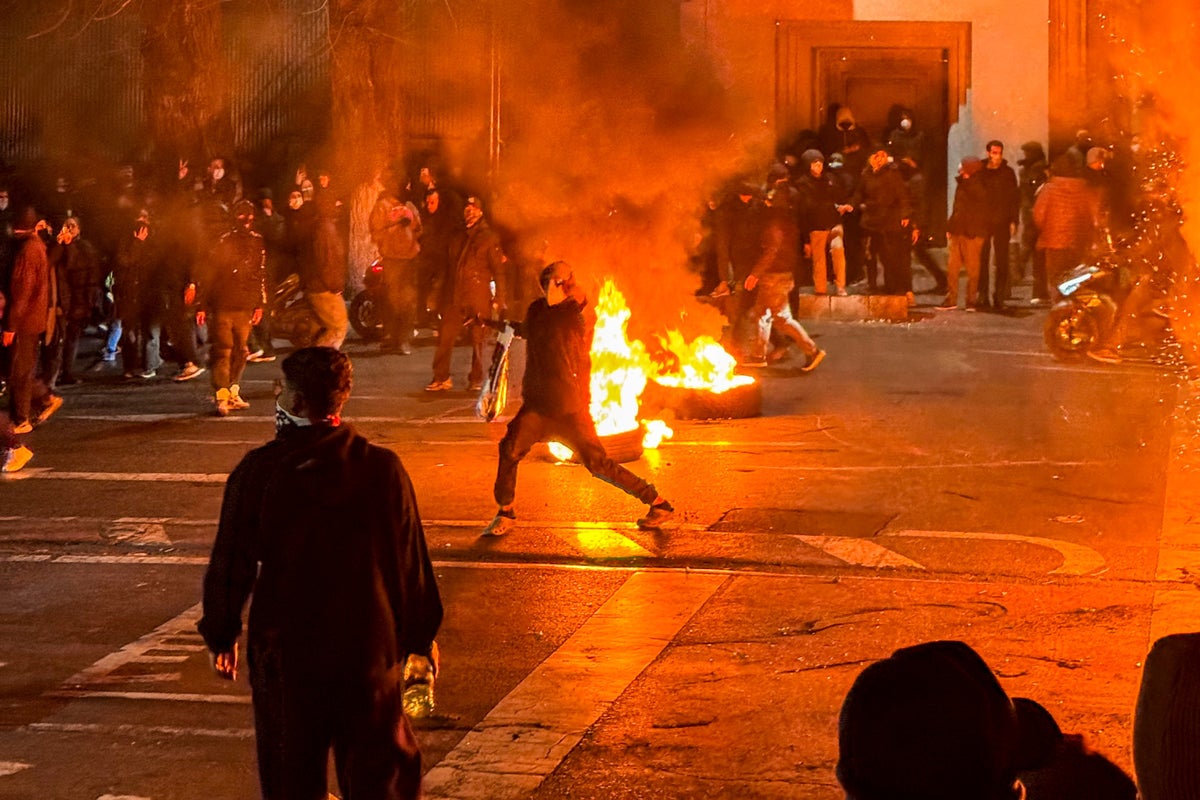
First, from what can be discerned and verified from outside, the scale of the protests is growing in size and scope – spreading across all classes and regions of the nation, and not just the big cities. There is now a sense of a popular movement gathering force, one that looks more capable of changing the country than previous uprisings ever did.
Second, the precedent for direct action in Iran – rather than relying on Israel as a proxy – was set when the United States launched its successful raids on the nuclear facilities at Natanz and Esfahan in June. President Trump, as ever, overstated the damage, but it was nonetheless real. The American firepower deployed was formidable – no fewer than 14 “bunker-buster” bombs, alongside an aerial armada only this superpower could muster. Iran’s previously much-feared air-defence systems proved almost useless, and retaliation from Iran’s militant allies in the region was limited.
Third, President Trump has acquired a taste for intervention that would have seemed impossible during the early, isolationist phase of his presidency. He can see just how far his attack on Venezuela, for example, has altered the facts on the ground, and he and his closest, most ideologically attuned advisers have drawn what they consider to be the obvious conclusion: might is right.
The same logic underpins the present strikes on Isis targets in Syria. Hence, the continual rattling of threats from the White House that American forces are “locked and loaded”, and that they will hit the ayatollahs “where it hurts” if protesters are harmed.
Well, protesters are being harmed. The police are firing on civilians, cutting off phones and internet access to the outside world, and switching off street lights in an effort to crush the counterrevolution now underway. It was always going to be the case that the supreme leader, Ayatollah Ali Khamenei, would never surrender power, or even offer meaningful concessions, without a bloody fight. So it has transpired. This has been the modus operandi of the theocrats ever since they swept away the Shah, no liberal himself, in the Islamic Revolution of 1978-79, and turned what was at least a partially liberal and democratic revolt into a religious dictatorship with only a weak “civilian” arm of governance.
As the revolts enter their third week, the regime’s brutal tactics are failing. Elon Musk’s Starlink is providing some internet access, and videos and eyewitness accounts are coming out. Symbols and centres of power are being torn down and set alight. People are still pouring into the streets, and the police are still running away. Some of those tasked with repression – police officers, civil servants, even Revolutionary Guards and the army – may now be calculating where their personal interests lie, and are ready to switch sides. Momentum is building.
The footage and testimony emerging from Iran are vivid and deeply moving. These are brave, patriotic people, exhausted by poverty and by being bossed around by the Islamic Republic’s elite. However strange it may sound, President Trump may even feel a degree of genuine sympathy for the protesters and their cause, as well as wanting to see the back of a regime that has been an implacable enemy of the United States for almost half a century.
The president may believe that he can deter Iran’s theocratic leadership from unleashing further violence with the threat of unspecified reprisals by US forces. Yet it is Washington, not Tehran, that should exercise restraint. Such intervention would be entirely unnecessary and counterproductive. It would hand the ayatollahs the “proof” they crave that the counterrevolution is merely an agent of the “Great Satan”, splintering the Iranian resistance. It would also play into ancient folk legends – partly justified, to be fair – about nefarious Anglo-American interference in Iranian affairs and the theft of its oil resources.
Looking further ahead, and depending on the nature of any strikes, bombing the regime out of existence could also destroy the machinery of government and the oil industry so completely that Iran would disintegrate even as it liberated itself – as happened in Libya, Afghanistan, Iraq and Syria. Planning for “the day after”, when Ayatollah Khamenei might flee for his life to Moscow, appears conspicuously absent in Washington.
That said, the European “E3” powers – Britain, France and Germany – now forming an emerging de facto diplomatic bloc, could be far more forceful in their warnings to the regime and in their support for the forces of light. Urging Tehran merely to “exercise restraint, refrain from violence, and uphold the fundamental rights of Iran’s citizens” sounds as wishful as it is weak.
The people of Iran deserve to know that if they want regime change, the West shares that ambition and stands ready to help them stabilise and rebuild their country. For now, however, the task of completing this counterrevolution rests with the Iranian people themselves.
#Trumps #military #threats #risk #sabotaging #Irans #moment #change