
The Sun has had a busy few years. And, in 2026, it doesn’t look set to stop.
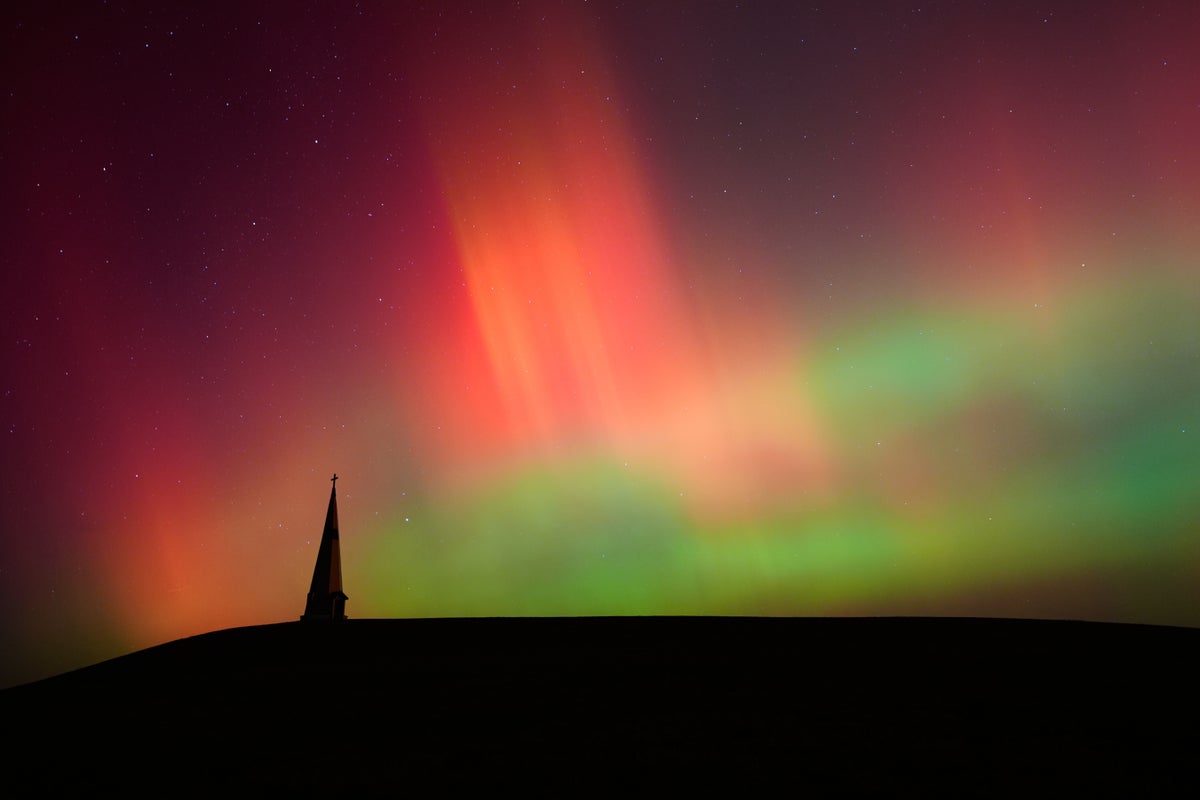
The coming year is set to bring even more opportunities to see the northern lights, the swirling, colourful display that has been seen numerous times across the UK in recent years.
Our Sun goes through an 11-year cycle, over which its activity rises and falls. It hit its most recent peak towards the end of 2024, but we are still in a particularly busy period for the Sun.
During those times, it releases more material and energy out into the space around it. Sometimes, those solar flares hit Earth and interact with our atmosphere.
Some of the sun’s activity can be dangerous: coronal mass ejections can damage power grids, for instance, potentially leading to power outages. But they can be beautiful, too: the charged particles of those same CMEs interact with the atoms and molecules in our atmosphere to cause the northern lights, or aurora borealis.
That has happened numerous times in recent months and years, and has led to a new excitement about spotting the northern lights. Stronger solar activity means that the effect is visible at more southern latitudes, meaning that they have been visible in parts of the UK, US and elsewhere that don’t usually get to see them.
The Sun is now on its way towards a less active part of its cycle, and it will reach its “solar minimum” around 2031, according to Nasa. But we are still coming off a particularly high point, which means that 2026 is still likely to see more northern lights.
Part of the reason that we are able to see more of the northern lights these days is not actually to do with the Sun, but with us. Despite its importance and relative proximity to us, the Sun’s processes still remain largely mysterious, but research including the Parker Solar Probe that flew to the Sun has allowed us to better understand and predict its activity.
That has meant that we are able to better understand space weather, spotting activity on the Sun before it actually arrives with us and allowing experts to predict when and where the northern lights will be seen. Both the Met Office in the UK and the US’s Space Weather Prediction Center keep a constant watch on the Sun – and therefore can give real-time updates on whether and where aurora might be seen.
#Northern #lights #year #skys #stunning #spectacles